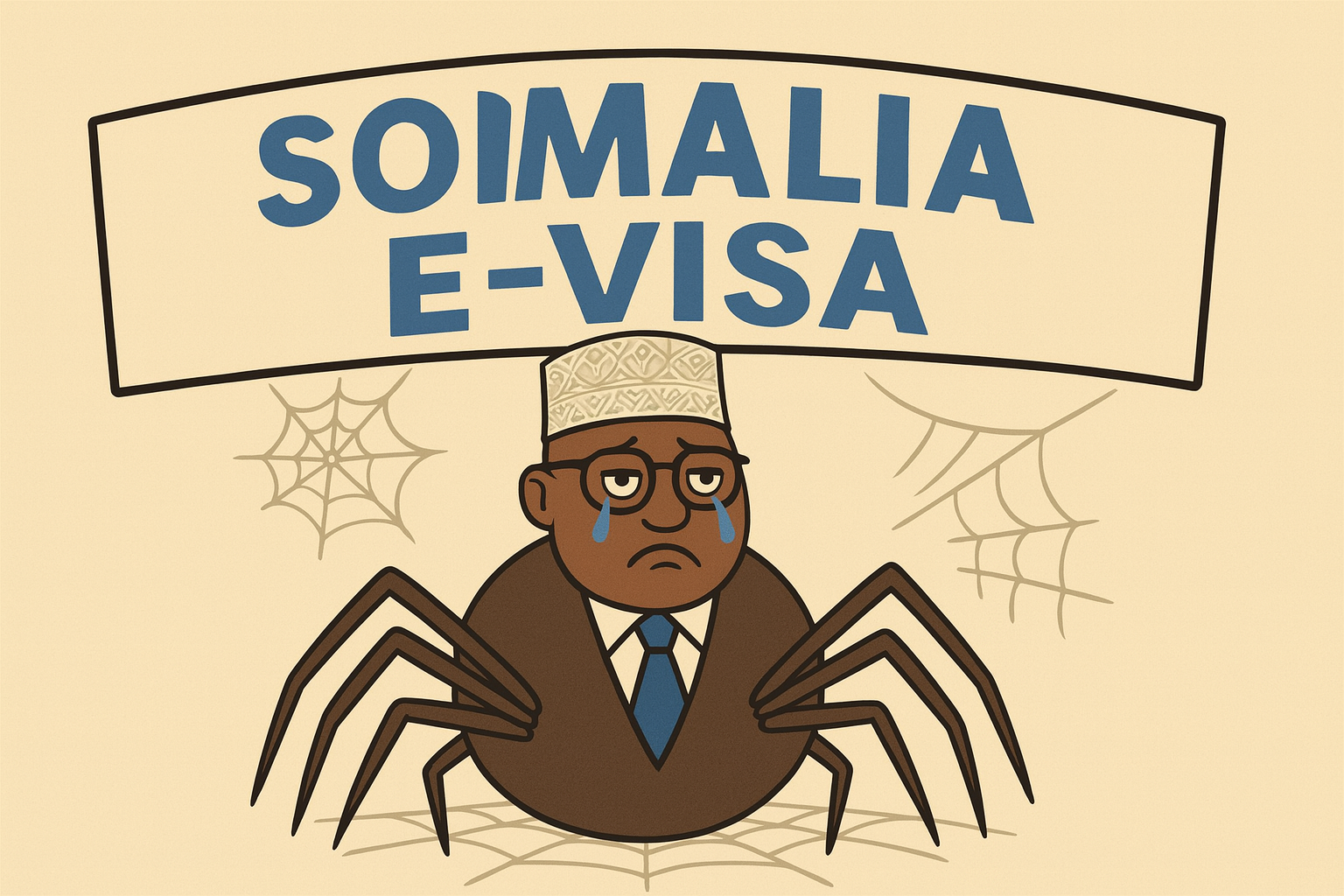
The Somalia eVisa breach is not merely a data leak; it is an electronic nuclear bomb in the Horn of Africa's security landscape. As detailed in my previous analysis, this compromise exposes intelligence officers, diplomats, aid workers, and thousands of ordinary civilians, including children.
After four days of reporting, this breach is now accepted as fact. Several countries, including the United States and United Kingdom embassies, have published official warnings about the data breach, confirming the severity of the compromise.
A Breach That Never Ended
The system remains compromised. As of 16 November 2025, anyone without sophisticated hacking skills can still access random passport information directly from the Somalia eVisa/etas website. The recent changes that were introduced are easily bypassed. A seven-year-old child's full passport details remain accessible to anyone who knows where to look.
This is not only about intelligence officers whose careers are now destroyed. It is about children and women whose safety is being ignored while officials worry only about security personnel. It is profoundly irresponsible to maintain this fiction while vulnerable people remain exposed.
Permanent Consequences
Every individual whose data was exposed now faces lifelong consequences. Immigration officers around the world will treat them with increased suspicion; not because of anything they have done, but because their identity documents have been weaponised. Enhanced screening, biometric re-verification, and permanent security flags will follow them for life. They will have to continually prove they are the real person, not an imposter using stolen credentials.
If your data was exposed:
- Contact your passport office immediately
- You will need to change your passport
- Consider changing move houses (since addresses are also leaked)
Somalia's Patron State Problem
Somalia exists as a salad of patron states: Turkey, Qatar, the UAE, the United States, and the European Union. Each maintains its own intelligence operation. The breach has created a unique situation where intelligence units from different patron states can drill into each other's data. What used to be compartmentalised is now a free-for-all intelligence environment.
The Technical Reality
I was among several technologists who advised shutting down this Breach-as-a-Service platform. The warnings were ignored. With a system this insecure, the breach was a matter of when, not if. Some loopholes may have even been left open intentionally for certain actors, which is a disturbing possibility given the geopolitical environment.
The Data Quality Problem
The leaked dataset is not a clean list of 35,000 legitimate records. It includes fake IDs, joke names, and obvious fabrications. The system performs no validation at all and will accept passport forms regardless of authenticity. This exposes another layer of dysfunction; Somalia's eVisa/etas platform cannot tell the difference between a real application and nonsense.
However, anyone with the full data dump can quickly identify the genuine entries with basic filtering. The presence of fake entries does not protect the victims. It only highlights the system's complete failure at every level. I know with certainty that legitimate applications are included because I have personally verified the presence of applications from friends and family members in the exposed dataset.
Action Required Now
The server is hosted in the United States. The FBI should shut it down immediately. This is not simply a sovereignty matter; it is a child safety crisis, an intelligence catastrophe, and an ongoing crime against thousands of civilians.
A note on attribution: There are rumours suggesting I am behind this breach. To be clear: I am not a hacker. My professional role involves securing systems from hackers, which is entirely different work. The actual attackers have already identified themselves through anonymous accounts on social media platforms.