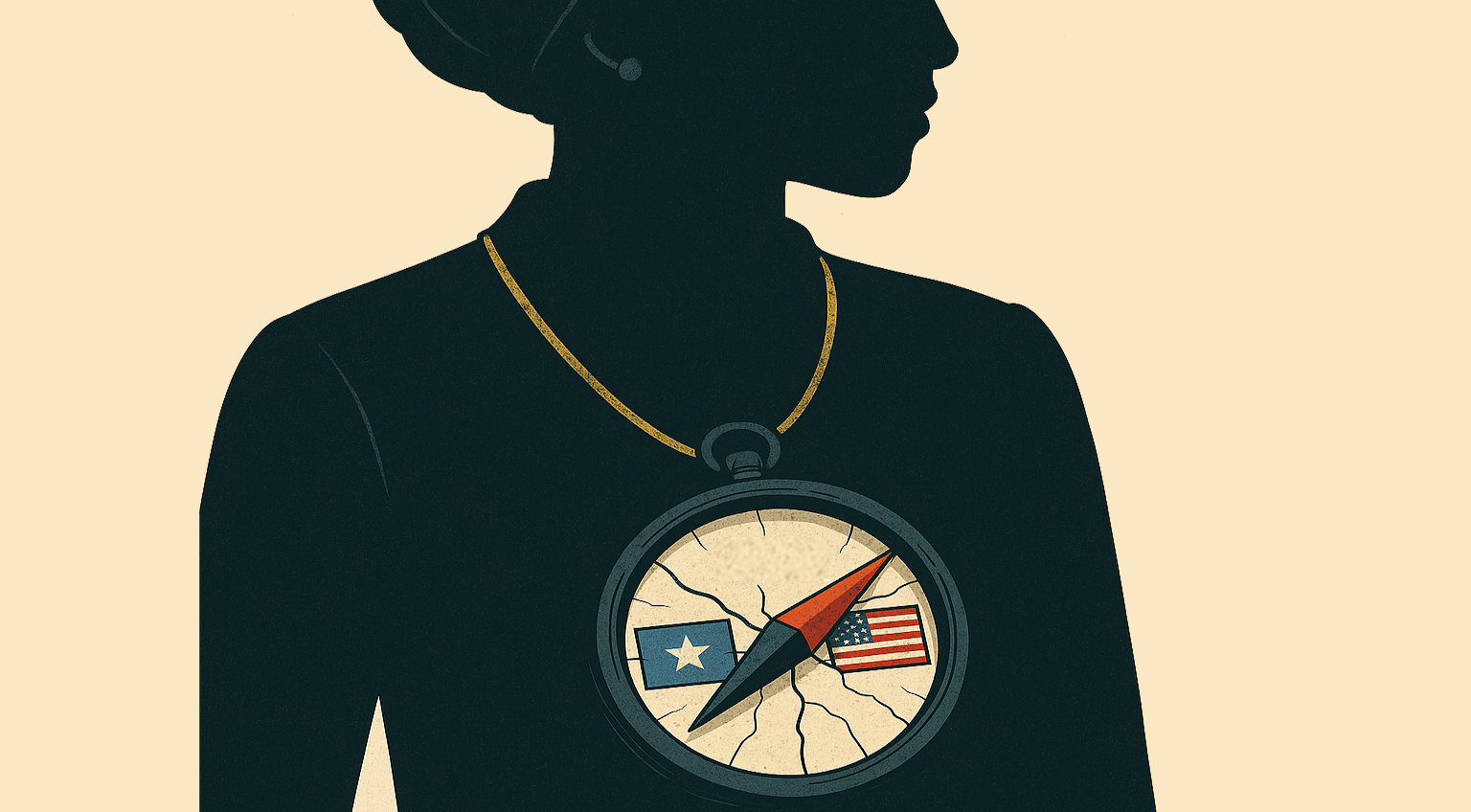
Is Ilhan Omar simply a victim of racism, or is there something deeper at play in her political trajectory?
For any diaspora watching her career, the question is worth examining not as a hit piece, but as a lesson in what works for the next generation of leaders. Her rise to Congress is remarkable, but understanding the mechanics of that rise reveals an instructive paradox.
Consider her latest track record:
- She calls White men the most dangerous threat to America1 2 3
- She calls for missing Somali territories in Kenya and Ethiopia4
- She calls Somalilanders imposters or Somali wannabes5 6
- She calls MAGA supporters idiots, stupid, and ignorant7
How does a sitting US legislator speak like an old auntie living in Mogadishu?
The answer is simple. Ilhan trades on hate and a Somalia-first agenda, which gave her a competitive advantage locally.8 9
Character? Depth? Thought Leadership?
No, none of that is required.
She just needs to stick to Somalia first and play a few race cards.
That's a very smart plan to win locally, and it worked. However, on a federal level, these behaviours make any representative truly despicable.
A representative should be a model for assimilation and for law and order. Ilhan stands for the opposite of that.
She could oppose Somaliland recognition from a principled position. Instead, her stance is shaped by her upbringing amongst members of Siyad Barre's regime who committed the Isaaq Genocide. Her roots are limiting her ability to be trusted in places like the Foreign Affairs Committee.10
Regardless of where one stands on the impact of Trump's return and the rise of political right and conservatism, one thing is clear: America is past the DEI stage and past experimenting with multiculturalism. It's a new era of dealing with the fallout from those experiments.
Ilhan wasn't trained for this era. She is hardwired to the outdated ideas of those experiments.
So what stops a leader from adapting to new political changes?
Many of you will say dual citizenship. Personally, and I could be biased here, the issue isn't with dual citizenship by itself.
The issue is when a person has two incompatible kinds of nationalism within their belief system.
Ideally, Ilhan should follow the handbook of politicians like Zohran Mamdani, the New York City mayor-elect who has found a balance between maintaining a working relationship with Trump whilst holding principled positions. Mamdani comes from a minority Indian African background and is therefore less susceptible to the ethno-nationalism of Barre's regime that shaped Ilhan's worldview.
Unlike Ilhan, Mamdani doesn't import foreign territorial disputes into American politics. He advocates for progressive policies without treating his office as an extension of any homeland's foreign ministry. His constituents see him as their representative first, not as a diaspora spokesperson.
This is the crucial difference: Mamdani's identity informs his politics without consuming it. Indeed, Ilhan's support base is largely an ethnic-centric constituency that has one eye on America and another on the dream of Greater Somalia.
What makes her win locally is what makes her fail nationally.
And that's what I call the Ilhan Paradox.
The scary part is: what if Ilhan was complacent about, or possibly even covering up, the widespread fraud in Minnesota? It was Trump, not Ilhan, who jumped quickly and passionately to address these concerns, faster than Ilhan or Minnesota's governor did.
As I mentioned, I don't want this to be an article attacking Ilhan, but I cannot help but wonder if this is yet another example of the Ilhan Paradox. How a repeated conflict of interest always comes up between her job as federal legislator and various candidate factions within her constituency's kinship networks.
If it wasn't for Trump, how long could this fraud have continued? And is that what you expect to take place in a developed nation like America?
What other US policies were influenced by Ilhan Omar that Trump needs to review under US national interest only? Horn of Africa policy, foreign aid allocation, Somaliland recognition, regional security partnerships. Has lobbying shaped these decisions to prioritize Greater Somalia ideology over American interests?
The Ilhan Paradox isn't just about Ilhan herself or America. What happens when dual loyalties collide with public office anywhere in the west? When ethnic grievances trump national interest? When local political machines export their conflicts to national policy?
Indeed, it is on the diaspora to answer these questions.