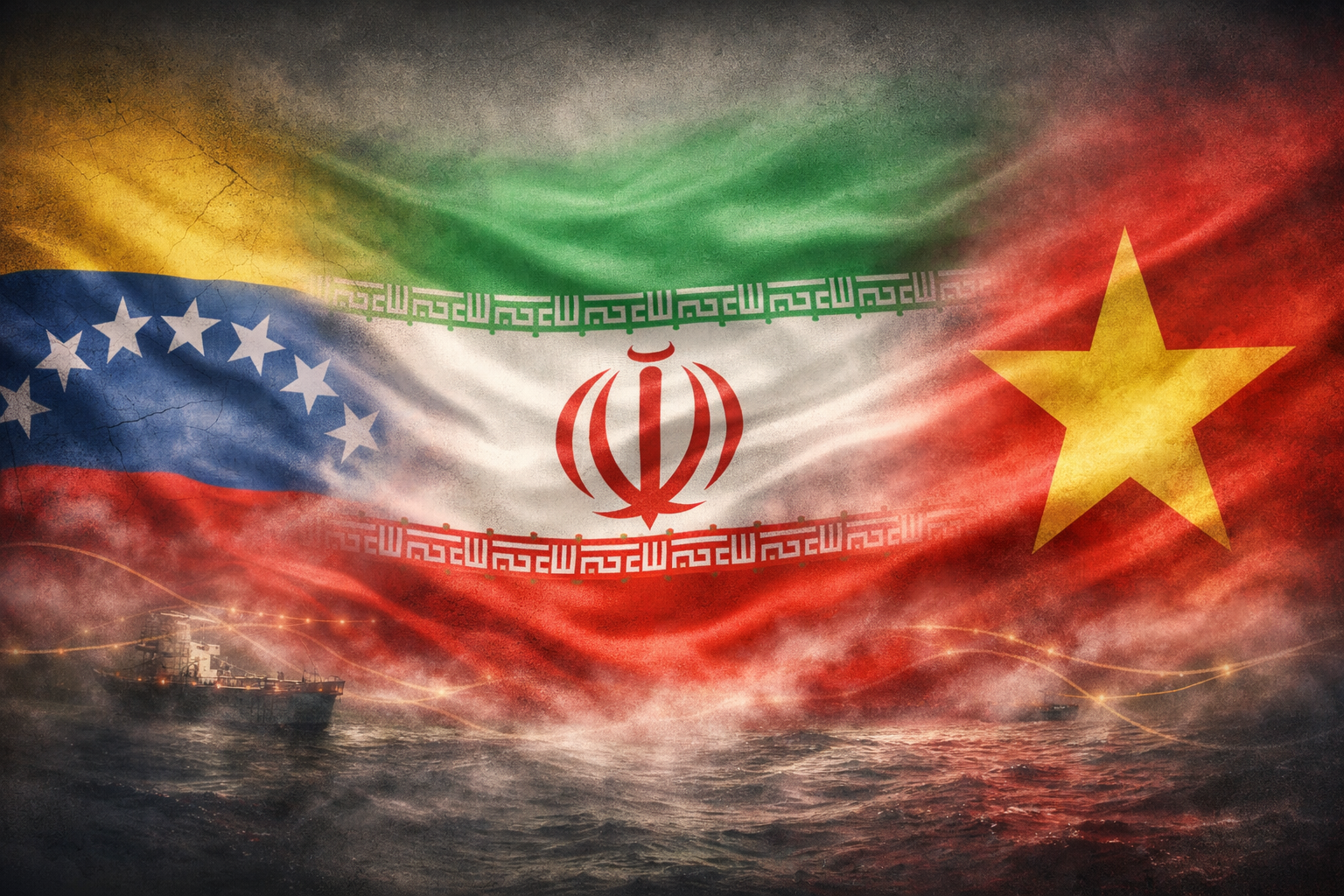
Yes, Iran is winning. And instead of a Venezuela, we have been handed a Vietnam.
One of the core aims of this war was to stop Iran from acquiring nuclear weapons. But Iran has adapted. It has found something arguably more powerful than a nuclear bomb: the ability to hold global energy, the Gulf states, and with them the entire world economy, hostage.
A nuclear bomb has a direct effect on the place it hits. Its destruction is immediate, contained, and visible.
Iran's weapon is different.
It does not strike one city. It ripples across the entire planet. By threatening critical chokepoints like the Strait of Hormuz, Iran can trigger energy shocks, inflation, and supply crises that affect literally every country on Earth. And that is before we even consider the Bab el-Mandeb.
This is a weapon of mass disruption. Not against people directly, but against the global system itself. In practice, it touches every living human being.
Targeting Gulf states is, of course, immoral, just like any weapon of mass destruction. But that is the nature of such weapons: states turn to them when they feel cornered or invaded.
There is another reason Iran is gaining ground. A key objective of its adversaries was to end Iran's regional hegemony. Instead, by effectively controlling and threatening critical chokepoints, Iran is positioning itself to cement that dominance in the future.
Here is the most dangerous shift: this is no longer just ideological ambition. For the IRGC to survive as a regime, maintaining control over these chokepoints is becoming a strategic necessity.
Everything changes if Saudi Arabia, under Mohammed bin Salman, enters the war. That would reshape the balance entirely and could cement Saudi Arabia as the future regional hegemon. It would be a painful war, but history shows that this is often how great powers rise. Unlike nuclear weapons, this kind of leverage can be dismantled. But only if major economies, Gulf states, and Western publics are willing to absorb real economic pain and act collectively to confront and defeat the IRGC.
From this perspective, the US faces a hard reality. If it remains the only country carrying this fight, withdrawal becomes the rational option. This is not a war a divided America can sustainably fight alone. It could, but the cost would be unjustifiable, especially if the US ends up doing the all heavy lifting.