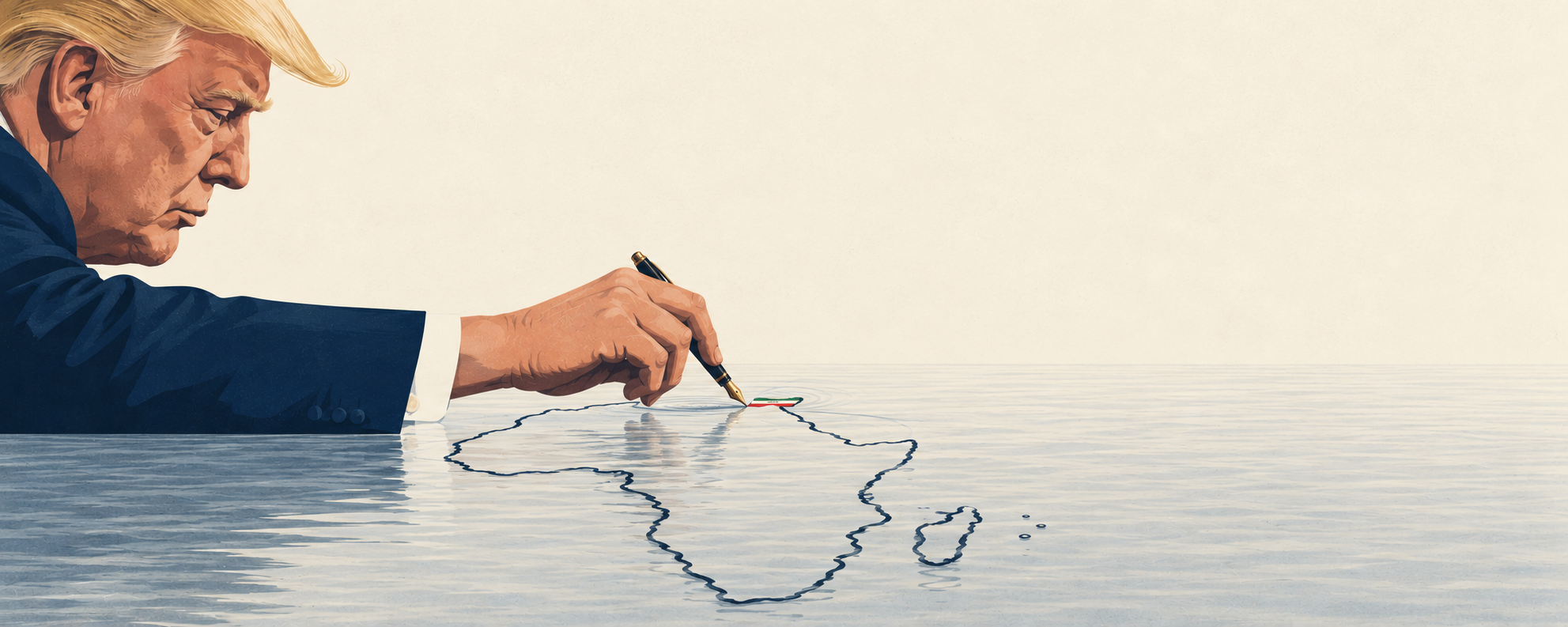
The most useful signal from President Trump's Somaliland remarks was what followed them. At his 12 October rally in Youngstown, Ohio, he interrupted his attack on Somalia to distinguish Somaliland as a totally different country and acknowledge that some people like it. In the days afterwards, Africa did not unravel. That quiet aftermath deserves more strategic attention than the excitement over the mention itself.
The distinction was welcome, but Somalilanders should keep the measure of success clear. Being mentioned by an American president is no substitute for full recognition by the United States. Nor was this Trump's first encounter with the subject. He had previously said his administration was looking into it, and later questioned how many people even knew Somaliland. This time, he carried the distinction into an unrelated speech without needing a reporter to introduce it. Trump even suggested an idea long discussed among Somalilanders: changing Somaliland's name.
That distinction matters with Trump because changing an established impression is difficult, even for an exceptional politician. At eighty, with a lifetime of fixed associations, he is hardly approaching every country with a blank slate. His repeated allegation about Ilhan Omar marrying her brother illustrates the problem. The allegation is unsubstantiated, and the suggestion that such a marriage brought her to America reverses the chronology of her arrival as a refugee long before the marriage in question. His position on Ethiopia's dam, and his recurring portrayal of Somalia, likewise show how firmly an initial frame can hold. Getting a distinction into that frame takes more than placing a briefing paper on a desk.
Somaliland's advocates and officials deserve credit for pursuing that work through official channels, personal relationships and X. We cannot allocate the result to one conversation or one handshake, but the remark is consistent with sustained advocacy reaching both Trump and the people around him. His acknowledgement of Somaliland's supporters makes those relationships especially valuable. That diplomatic outreach should widen, sustaining friendships beyond the news cycle that briefly makes them visible.
The more consequential opportunity belongs to those supporters now. The president of the world's most powerful country publicly distinguished Somaliland from Somalia before a mass political audience. A formal declaration would carry authority that an improvised rally remark does not, but the political proposition was already spoken aloud and circulated widely. Whether accidental or deliberate, this gave his circle an opportunity to observe what happens when he treats the two as different countries.
Where were the twenty new African independence movements supposedly waiting for that sentence? Where was the regional war automatically triggered by acknowledging Somaliland? Neither materialised in the immediate aftermath. Somalia's federal political formations, dominated by warlords, did not suddenly turn themselves into twenty Somalilands. They already know the difference between their own contests for power within Somalia and Somaliland's claim to restored sovereignty. For these actors, Somalia's internal fragmentation is the relevant precedent; Somaliland is not an interchangeable model for every faction seeking office or territory.
This is the weakness in the Pandora's box argument. Somaliland's special case does not become a universal permission slip merely because an American president acknowledges it. Israel's recognition supplied a stronger test because it was an actual state decision. It drew condemnation, including from the African Union, but condemnation is different from the automatic continental cascade invoked to prevent recognition. Opponents can object to Somaliland while still understanding why its case is distinct.
Trump's supporters now have an observed reaction to set beside predictions of immediate upheaval. They should use it to challenge those predictions directly, asking which concrete consequences are expected from a formal declaration and why, rather than accepting a vague warning as sufficient reason for permanent delay.
Nor would acting without African Union approval be new for Trump. His December 2020 recognition of Moroccan sovereignty over Western Sahara ran against the AU's position on Sahrawi self-determination. Whatever one thinks of that decision, it demonstrated that he would make an American recognition choice without securing the organisation's consent.
The more relevant precedent for recognising the end of an ideological union predates Trump. Egypt and Syria formed the United Arab Republic in 1958; Syria unilaterally ended the experiment in September 1961. Washington recognised the restored Syrian state on 10 October. Two independent countries had pursued a political ideal, and the failure of that project did not oblige America to preserve the union in its diplomacy.
Somaliland's prior sovereign statehood makes that comparison more useful than treating recognition as a uniquely Trumpian disruption. Somaliland went into a de facto union with the State of Somalia, which had formerly been administered by Italy. Its attempted union has a distinct legal history, but the shared political question is whether a failed experiment must bind its former participants indefinitely.
The task for Somaliland's friends around Trump is to bring these lessons back to him and press for the decision. They have both an immediate opening and an older American precedent for acting without waiting for the former partner's recognition. Somaliland's officials and advocates should keep deepening the friendship with the United States, while ensuring that access leads towards formal recognition and a lasting relationship between the two countries.