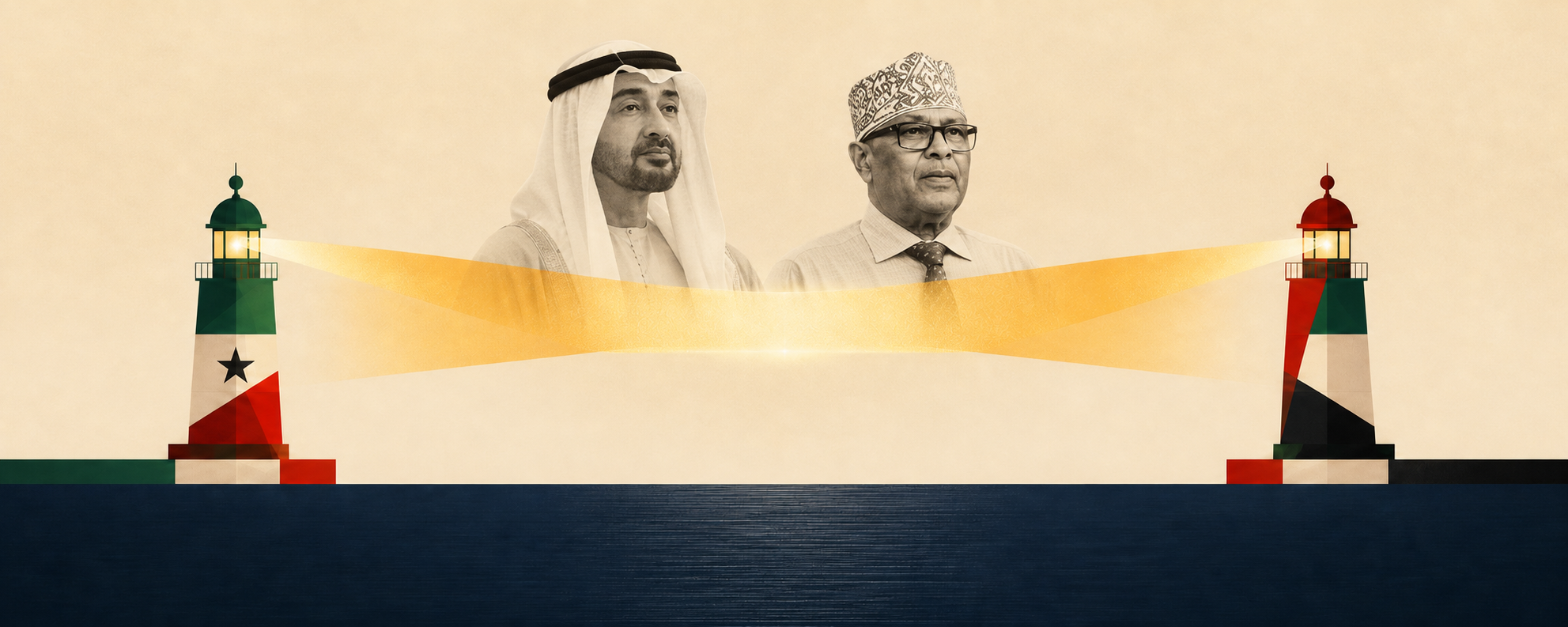
Berbera has created a trust dividend between the United Arab Emirates and Somaliland, connecting Gulf commerce to East African markets and proving cooperation can precede diplomacy. With Israel's December 2025 recognition opening the door, the UAE can become the first Arab country to recognise Somaliland without surrendering other relationships. The President should direct the UAE foreign ministry to begin a legal and strategic recognition review with Somaliland's foreign ministry.
DP World committed up to 442 million dollars to expand Berbera Port, then opened the Berbera Economic Zone and established a shipping route to Jebel Ali. The port, zone and corridor now form one commercial system serving Somaliland, Ethiopia and the Gulf. The UAE found a partner that had built peace, institutions and government, then supplied the capital and logistics that turned location into leverage. Recognition would protect completed work by replacing ambiguity with a durable state relationship and greater investor confidence.
Both countries built workable unions. Seven emirates formed a constitutional federation; Somaliland formed a political compact among communities whose elders established their protected territory through nineteenth century treaties. Both reached for larger arrangements. Emirati founders pursued a federation of nine with Qatar and Bahrain, then accepted the workable seven. Somaliland's larger attempt followed a harsher path, ending in failure and restored sovereignty.
The British independence instrument made Somaliland independent on 26 June 1960. On 1 July, Somaliland went into a de facto union with the State of Somalia, which had formerly been administered by Italy. The AU's 2005 fact finding mission found that the attempted union between two sovereign countries was never ratified, called the recognition case unique and rejected a secessionist precedent. Restored sovereignty rests on state continuity.
The AU's Constitutive Act binds its members rather than the UAE. Article 34 of the Vienna Convention provides that treaties create no obligations for third states without consent. Recognition remains each sovereign country's choice. The AU itself admitted Morocco in 2017 while retaining the Sahrawi Republic, accommodating opposing recognition positions on Western Sahara. Other countries may recognise Somaliland or decline; neither choice compels Abu Dhabi.
The strongest objection may be another condemnation flood after Israel's recognition. Abu Dhabi has one answer. Where was that energy when Iran attacked the UAE? Somaliland condemned the attacks before the GCC and EU meeting and Arab League session. Proven loyalty matters more.
Recognition would make the UAE a bridge linking the Arab world, Somaliland and Ethiopia. Berbera already connects their economies; formal ties would give Hargeisa and Addis Ababa a dependable Arab political partner. Today's critics may eventually appreciate the channel through which Hargeisa keeps an ear open to legitimate Arab interests.
Washington is a reason to act, not wait. The White House describes a strategic partnership with the UAE spanning decades of defence, trade, energy and diplomacy. Abu Dhabi should encourage President Trump to recognise Somaliland, and Washington should follow its trusted partner's lead. Emirati recognition would frame that decision as coordinated Red Sea strategy and advance a realistic Arab policy. The partnership works. Policy should catch up with reality.