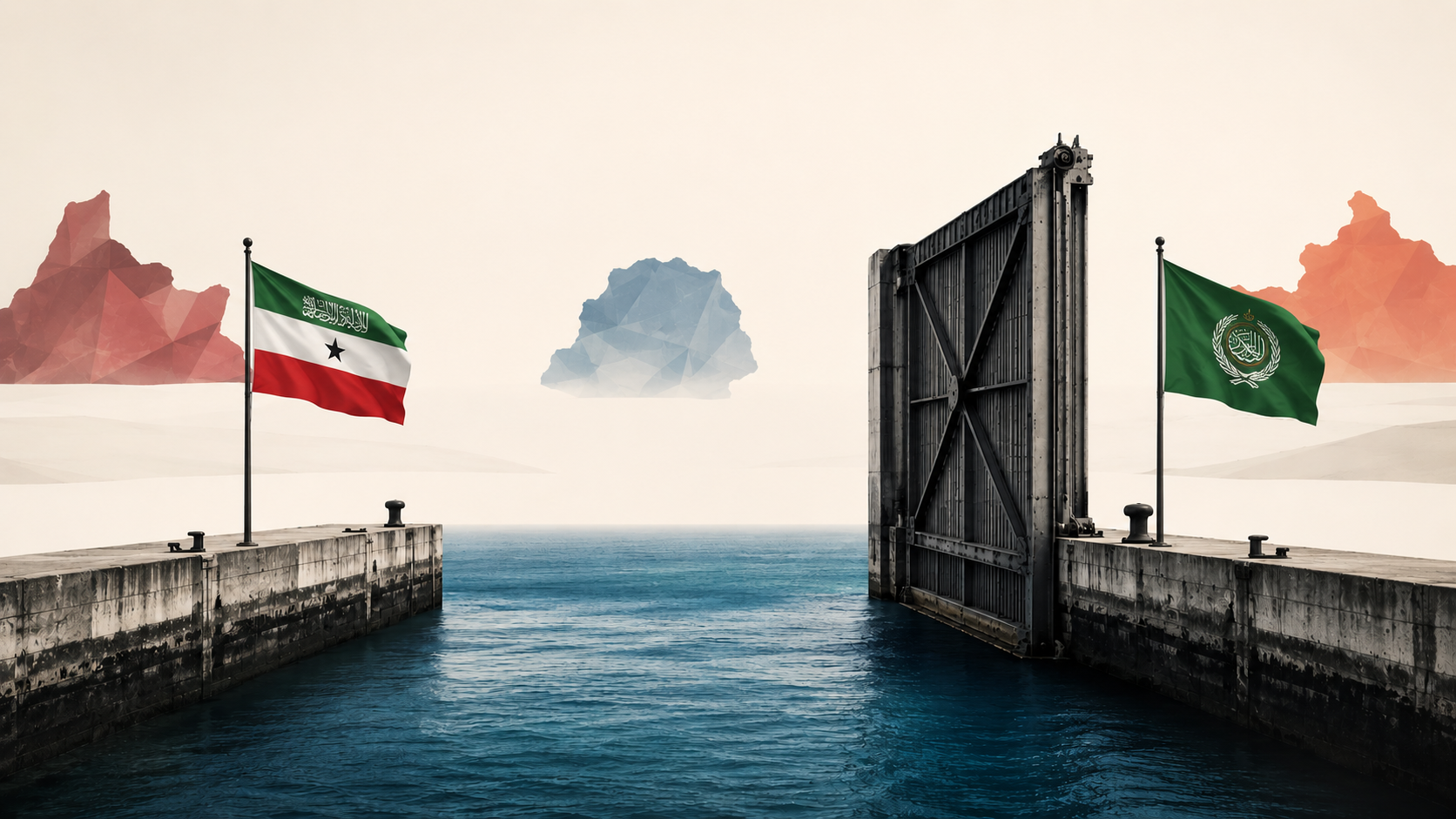
Arab policy towards the Horn of Africa must begin with the region as it exists. For more than three decades, inaccurate assumptions have produced disappointing results. Any strategy that begins with a wrong map ends with a wrong policy.
Somaliland is not Arab. Britannica describes Somalis as a Cushitic African people, whose language belongs to the Cushitic branch of the Afro Asiatic family. Like Turks, Iranians and Ethiopians, they have their own national, linguistic and historical identity. This is a fact, not an insult to Arabs. Respecting that identity builds partnerships; redefining peoples to fit inherited political imagination builds misunderstanding. The Horn is an important African neighbour of the Arab world, not its extension or subordinate space.
Somaliland sits on the Gulf of Aden, which Britannica describes as a distinct basin between Arabia and the Horn linking the Red Sea and Arabian Sea. Confusing it with the Red Sea obscures regional interests and balances of power. Egypt, Saudi Arabia and Turkey have no Gulf of Aden coast, and Cairo's objection that landlocked Ethiopia should have no maritime arrangement through Somaliland is illogical. Somaliland can make any lawful agreement concerning its own coast. Just as Egypt has no Black Sea veto, it has no Gulf of Aden veto.
Ethiopia, which the World Bank describes as Africa's second most populous country with about 135.9 million people in 2025, is central to this geography. Language, ethnicity, history, economics and shared interests tie Somaliland to its neighbour. Geography cannot be voted away or abolished by diplomatic resolution, which makes any Arab strategy that excludes Ethiopia doomed to fail. The Somaliland Ethiopia MOU must be understood within those relationships.
Houthi attacks devastated Suez shipping. Associated Press reported canal revenue falling from 10.25 billion dollars in 2023 to 3.991 billion in 2024, more than 6 billion dollars lost annually, and Egypt could not prevent the damage. Stronger partnerships among Somaliland, Ethiopia, Israel, the United States and other serious actors would help protect Bab al Mandab and the wider Gulf of Aden corridor from violent non state actors.
Predictions that Somaliland would disappear, collapse or return to Mogadishu have failed. Its institutions, government, elections, external relations, economy and security remain. One may support or oppose that reality, but denying it only postpones admitting the truth. Denial is not policy.
Many Arab actors assumed influence would arrive automatically while neglecting serious relations and political or economic investment in understanding Somaliland. Others filled the space, as international politics dictates. This is not a conspiracy. That is the point of To Riyadh, Do not lose Somaliland. Somaliland was not created by outside attention; Arab absence made it available to others.
The UAE acted differently. DP World committed up to 442 million dollars to develop Berbera Port, the greatest Arab backed investment in Somaliland's modern history, treating real infrastructure as an opportunity rather than a diplomatic embarrassment. Somalilanders warmly raised the Emirati flag in Hargeisa because they remember who came, invested and treated them with respect. The UAE's own account of its long political, commercial and investment relationship with Ethiopia, including major support announced in 2018, also lets it see Somaliland, Ethiopia and the Gulf as one strategic picture.
Somaliland's regional solidarity survives disagreements over recognition. Horndiplomat reported that on 1 March 2026 it strongly condemned Iranian strikes on the UAE, Qatar, Kuwait, Bahrain, Saudi Arabia and Jordan while Mogadishu remained silent. That was a clear commitment to Gulf security when the region was threatened.
Arab anxiety over Israeli ties should confront who left the opening. Somaliland did not move, change its geography or turn its back on the region. Further isolation gives Israel the benefits of partnership alone. Reducing its influence requires presence and competition, rather than abandoning the field and complaining about whoever enters it. Leaving Somaliland to others repeats the costly illusion described in Stop Subsidising the Illusion.
Somaliland offers a stable bridge to the Horn, Ethiopia and Africa's deeper economy through trade, maritime security, investment and regional cooperation. The League of Arab States should send an independent fact finding mission, open direct Hargeisa channels and develop economic, cultural and security relations grounded in geographic, demographic and political facts. Recognition is not a group order, and Arab consensus cannot substitute for reality.
A serious Arab policy begins by protecting interests in the world that exists, rather than preserving a fiction.