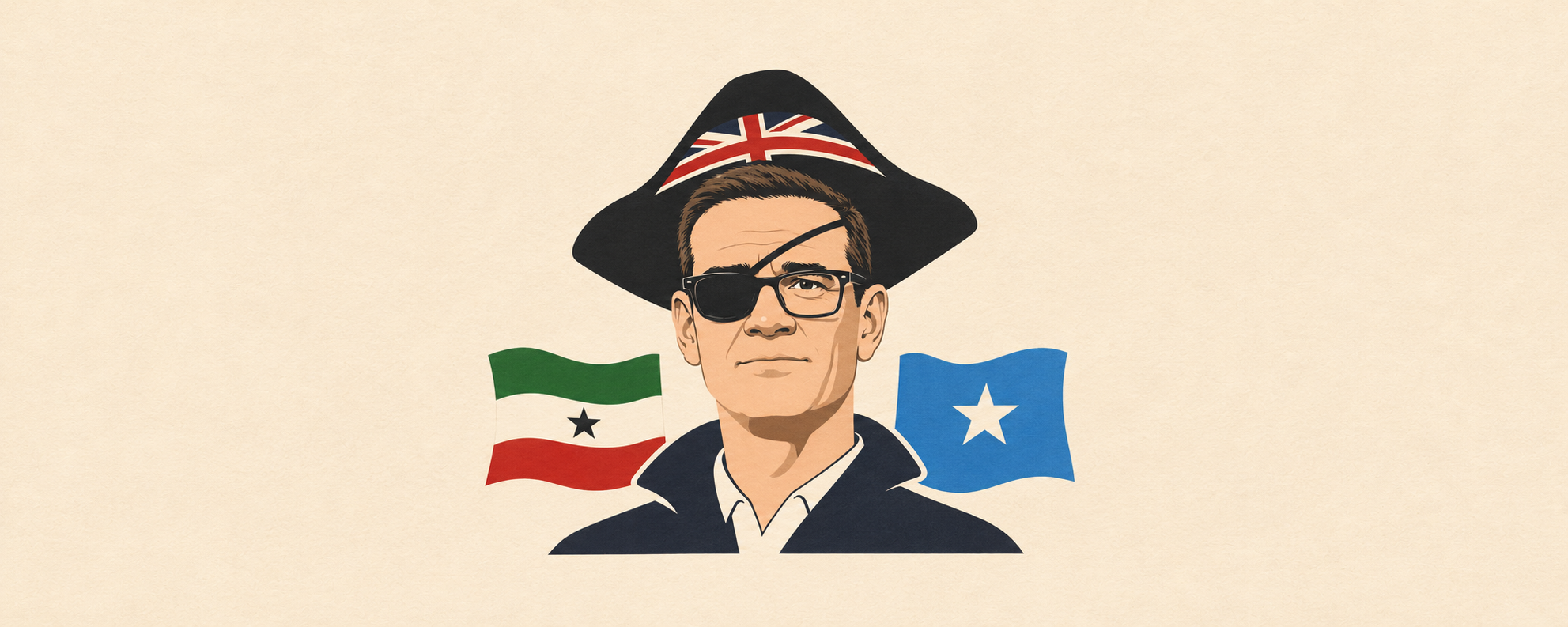
Britain is taking Somaliland's credentials and handing them to Somalia. Helping Somalia join the World Trade Organisation (WTO) while excluding Somaliland is one thing. Using Somaliland's people, coastline and trade to strengthen Somalia's case is something else entirely. This is fraud of the worst kind, committed by the UK government.
The International Trade Centre (ITC) helps Somalia prepare its accession documents through the British-funded Making Trade Happen project. In its 4 November account of that work, ITC writes:
"Somalia has about 18 million people and the longest coastline on the African mainland, but its exports rest largely on livestock. Live animal sales earned $576 million in 2025, mostly in the Gulf, according to ITC Trade Map."
Somaliland's roughly six million people, according to its government's estimate, are folded into that population. Its coastline helps make Somalia's the longest, while its livestock exports to Gulf markets through Berbera disappear into trade credited to Somalia. The country doing the work is excluded from the opportunity its work helps justify. This is the UK's piracy policy against Somaliland.
Britain funds the programme, and the programme uses this economic account to explain its work. London cannot treat the misattribution as somebody else's problem while paying for the initiative it promotes.
Britain knows where that trade comes from. Securing meat for its garrison at Aden was one reason it established the Somaliland protectorate. The same livestock trade that helped justify Britain's presence is now credited to Somalia by a British-funded programme. The neglect of the protectorate is being replayed in today's politics, with Somaliland's value serving British policy while responsibility towards its people is pushed aside.
Britain's relationship with Somaliland has become deeply damaging. MPs such as Stephen Doughty took Somalilanders' votes and trust, praised their country, then continued serving a Somalia-first government. Their advocacy helped sustain faith in a relationship whose policy still rewards Mogadishu.
Britain's hypocrisy also disqualifies its claim to neutral mediation. As I explained in my letter to Doughty, it recognised Palestine without first requiring a negotiated settlement with Israel. Palestine doesn't even satisfy the four Montevideo Convention criteria for statehood. Yet Somaliland must wait for agreement with Somalia. Britain recognises one country to advance peace, then lets another country's adversary withhold the same recognition.
Somaliland's government bears blame for leaving its terms unclear as renewed talks with Somalia are discussed. It must apply the Sovereign Parity Doctrine: a facilitator recognises both countries or neither. Hargeisa must refuse mediation by a state that recognises Somalia while denying Somaliland equal sovereign standing. Britain cannot endorse Mogadishu's claim before talks and call itself neutral at the table.
Somaliland's Ministry of Foreign Affairs should summon the British representative in Hargeysa for consultations and demand an explanation. Britain must require ITC to identify Somaliland's contribution separately and stop crediting its producers' work to Somalia. Parliamentary friendship is no answer to government conduct.
This is absolutely disgusting. British taxpayers' money is being wasted on a policy that advances the wrong country, while the country generating much of the trade receives neither British recognition nor credit for its work.
Somaliland produces. Somalia gets the credit. British taxpayers foot the bill.