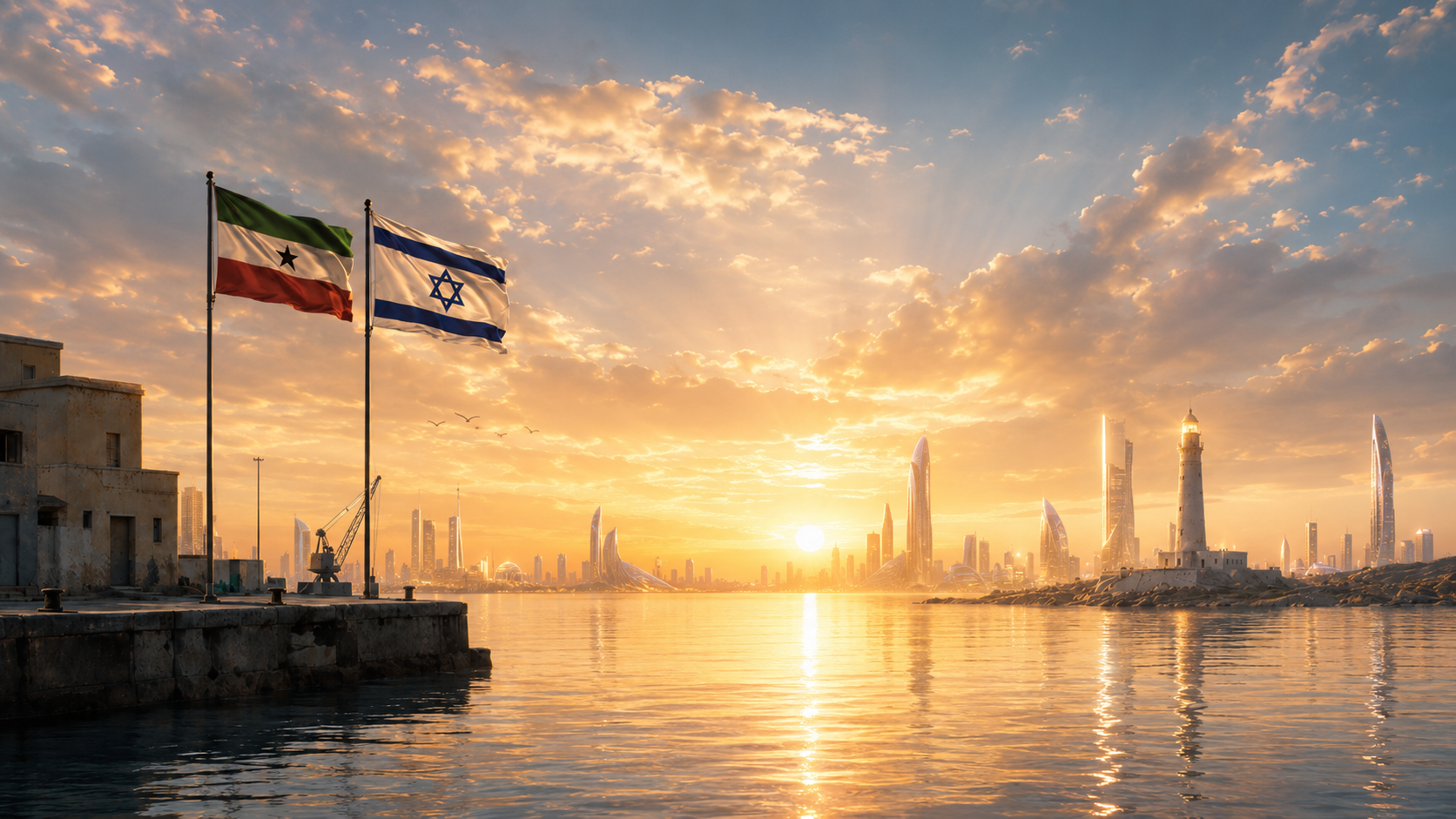
Regional governments and observers should assess Somaliland's relationship with Israel as a normal sovereign choice, separating genuine Gulf of Aden threats from stereotypes that turn every Israeli action into a war narrative. Somaliland should build ties on its own terms, and outsiders should judge outcomes rather than inherited taboos. This is a recognition transaction built on soft power, maritime order and practical cooperation.
Somaliland already talks to many states and entities, including the UAE, Taiwan and Ethiopia, without becoming anyone's proxy. The Houthis did not emerge because Hargeisa opened a channel to Israel, nor did Somali piracy return because Somaliland chose pragmatic diplomacy. Those threats require direct confrontation; linking them to its external relations confuses risk with responsibility.
There is no serious evidence that the relationship has made Somaliland a launch pad for conflict, and Somalilanders do not want attacks on the Houthis launched from their territory. If Washington targets the Houthis, it will act from strategic need rather than a Hargeisa permission slip. The stereotype that Israel fights Iran, Gaza, Lebanon or the Houthis by default likewise ignores its security logic, whatever outsiders think of the results.
From their current reach, the Houthis cannot sustain serious damage to Israel's population, but maritime disruption affects Saudi Arabia, the wider region and everyone trading through the Red Sea and Bab al Mandab. Attacks on ships linked to Israel are therefore a global concern, not a story about Israel wanting to fight Muslims. Closing Bab al Mandab would require regional and international effort, as with Hormuz. Israel needs no new base to give affected states a reason to keep the route open.
Media hostile to Somaliland depict empty terrain where outsiders move, erasing a political community capable of accepting, rejecting and explaining decisions. As in Le Monde's Berbera fiction, outlets recycle Palestinian refugee intake and Israeli base claims despite Hargeisa's denials. Their narrative needs Somaliland passive enough to be used and guilty enough to be blamed.
Internal taxes and remittances give Somaliland the financial independence to say yes or no. Somalia's greater dependence on outside support makes its choices more fragile, so Israeli ties with Somalia would raise greater concern about its ability to choose, refuse and act with discipline. Somaliland can choose partners by interest and principle, and recognition remains a decision for states, not hostile neighbours or regional habit. Mogadishu's permission is unnecessary.
The Israeli prime minister has explicitly linked recognition of Jerusalem to Israeli recognition of Somaliland. That is not a scandal. It is the transaction behind the deal. Kosovo followed the same path: Israel recognised Kosovo, Kosovo recognised Israel and opened its embassy in Jerusalem. Strategic, reciprocal recognition is becoming a form of international customary practice alongside its moral and legal dimensions. That makes Somaliland's case more realistic, because law without power rarely moves history.
The Gulf of Aden is not a private lake. It connects trade, shipping and revenue between the Red Sea and the Horn. More traffic through Suez means more traffic for Somaliland's ports. Treating Arab and non Arab divisions as fixed doctrine belongs to the same dead political era that still forces Somaliland into Somalia's frame after decades of failed control. A realistic Arab policy should recognise reality rather than let regional mood dictate sovereignty. Egypt should pursue the shared maritime interest instead of extracting tactical leverage from every waterway.
Israel's highest regional GDP per capita, innovation record and close American working relationship make it a serious partner with weight in Washington. Technology, agriculture, livestock and security offer mutually useful cooperation, while its diplomatic reach from South America to Asia and Australia can advance Somaliland's ambitions. Their shared democracy gives that practical opening political significance.
Recognising Somaliland first lets Israel act as a confident rising middle power, putting national interest above dogma. Djibouti cannot do it; Ethiopia tried and could not finish it. The move exposes international hypocrisy over a state meeting the Montevideo logic and claiming state continuity rather than secession. Israel gains standing by naming what others know but avoid, alongside commercial opportunities in Somaliland's location, minerals and untapped resources. This is no consolation prize.
The Iran war makes the timing sensitive, but a few hard months should not define a lasting partnership. Somaliland gains a serious ally; Israel gains a reliable East African presence and a bridge to partnerships involving Ethiopia, the UAE and America. No national interest in war is built into this relationship. Its space for soft power and practical cooperation should push back terrorism and Houthi violence rather than let them dominate.
Somaliland has paid political capital by moving amid antisemitism and hostility towards Israel, some now redirected towards Somaliland. Arab governments and Turkey may oppose it more loudly, but ignoring Somaliland for thirty five years and condemning it today produce the same de facto sanction through exclusion from normal development channels at a cost of billions. Pressure clarifies rather than weakens its resolve. Mogadishu should understand that Somaliland is not waiting to reunite; the distance is political, legal and psychological, and its resolve is at an all time high.
The relationship forces a question overdue for an answer. Do outsiders accept Somaliland's independence only when it behaves like a dependent territory? It deserves treatment as a state making sovereign choices. If that unsettles the region, good. Some assumptions deserve to be unsettled.
Somaliland is not the crisis. The crisis is the refusal to admit that Somaliland is already acting like a country.