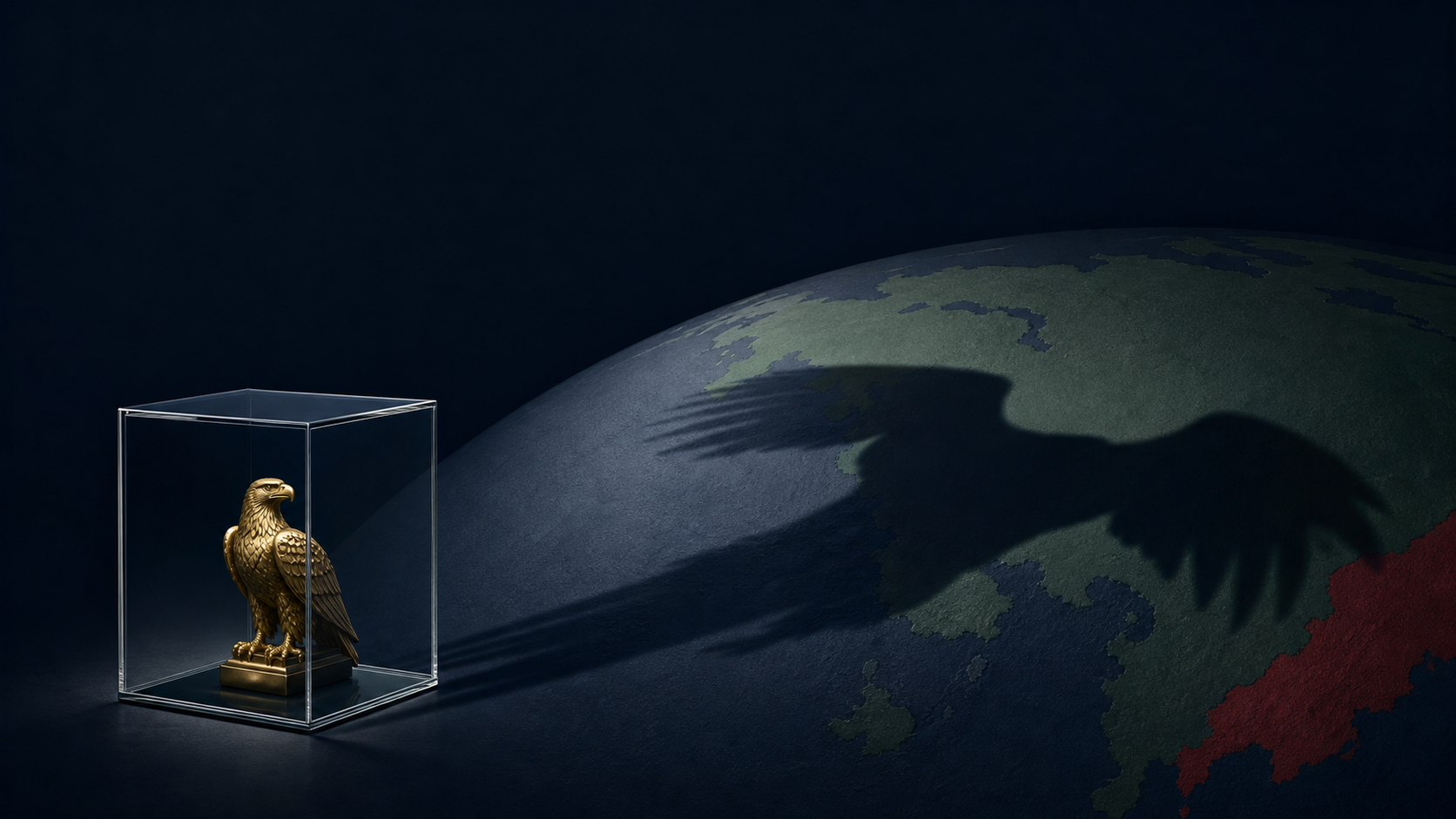
When isolationists say America First, what they often mean is America Meh. Washington should define America First as keeping the United States the world's undisputed superpower through winning wars, protecting global trade, securing strategic chokepoints, supporting allies and shaping the international order. Where possible, that includes supporting the freedom of oppressed nations, a moral reason allies choose Washington over Beijing or Moscow.
Too many isolationists want a wealthy middle power hiding behind two oceans and rarely leaving North America, treating distance as strategy and prosperity as separable from the international system that protects it. That logic would have failed in the 1940s, when America could not stay secure by treating the Second World War as somebody else's problem. Threats do not cease to concern America because they begin beyond its shores.
This does not require entering every conflict or occupying every hostile country. Power depends on priorities, action and credible commitments, including force or diplomacy when vital interests cannot be defended from home. As I argued in Trump's realist foreign policy, realism is the disciplined use of power in pursuit of national interest.
The Strait of Hormuz exposes the contradiction when isolationists acknowledge its importance to the American economy, then insist America should never become involved there. Energy markets, shipping insurance, allied economies and freedom of navigation are connected, as the strait's reopening showed. A country dependent on an open chokepoint cannot declare its security someone else's responsibility.
One strategic objective of the Iran war was to enable regional powers to manage more of their security without permanent American deployments or constant hands on diplomacy. Accepting limited costs now could reduce larger burdens later. But the war ended before those objectives were fully achieved, leaving Washington to intensify diplomacy rather than step back. Military restraint after an incomplete outcome transfers the burden to diplomacy.
Reducing the conflict to a favour for Netanyahu ignores Gulf security, freedom of navigation and a vital energy corridor. Saudi Arabia had its own interest in regime change before stepping back, as did Sunni political figures and sections of public opinion from Lebanon to Yemen. Israel was the loudest and most consistent voice because Iranian funded armed groups posed an existential threat, but it was one voice among several regional interests.
Accusations of Zionism and antisemitic tropes too often erase those regional interests and maritime stakes. That is analysis by slogan. Yet acknowledging them does not mean war alone can stabilise the region, because Iran has no exclusively military answer. Israel cannot serve as an alibi for pretending America has no independent interests in the outcome.
Whether America should accept peace for now and await a better opportunity is a serious debate, alongside strategy, timing, execution, cost and allied reliability. These questions test how well power is used; isolationism questions whether it should be used beyond the continent at all. A superpower cannot defend its interests through video calls, press statements and wishful thinking alone.
Superpowers do not lead by hiding. When America stops shaping the world around it, America First becomes America Meh.