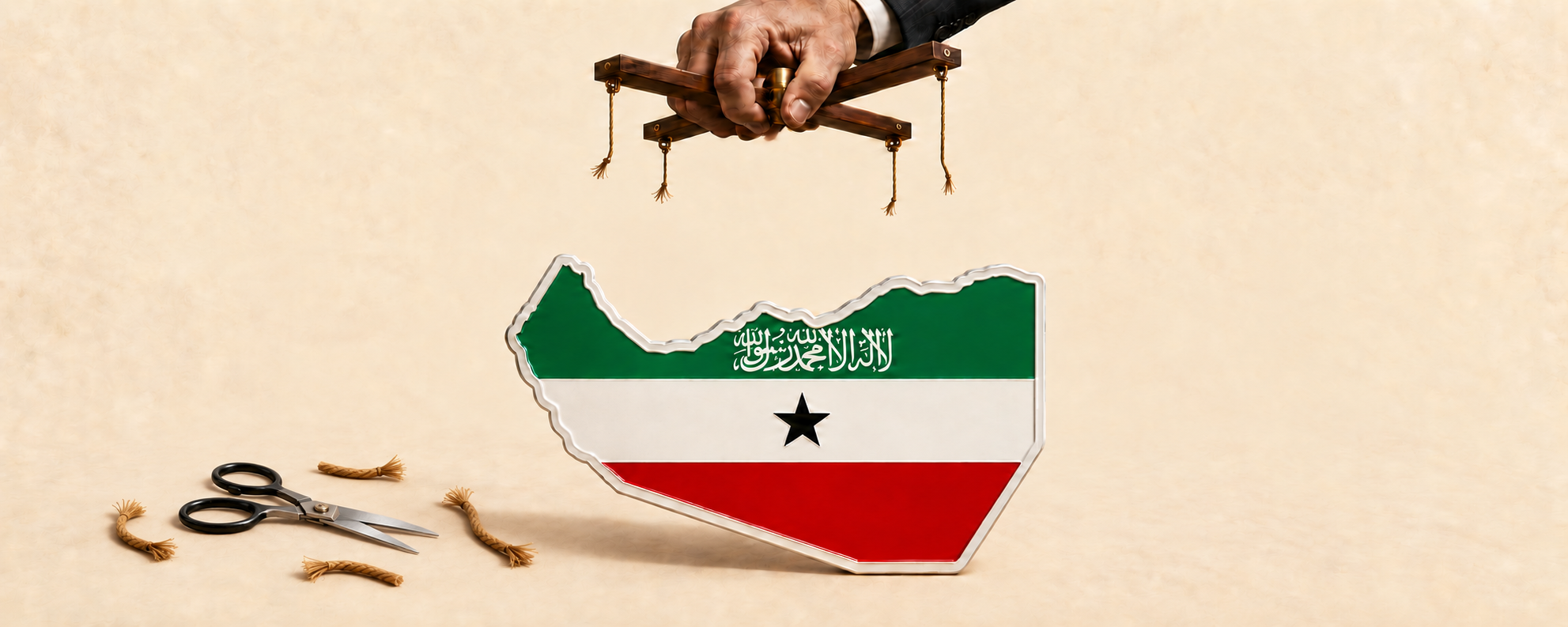
The Somaliland Ethiopia MOU is dead, killed unintentionally by Israel's principled position on recognition. The January 2024 bargain tied Ethiopian sea access to Somaliland's pursuit of recognition and publicised both countries' needs. Ethiopia later turned towards Somalia through the Ankara Declaration, but that declaration did not explicitly cancel the MOU. Its strategic rationale expired when Israel recognised Somaliland on 26 December 2025, leaving Somaliland partially recognised and Ethiopia unable to offer the first recognition any more.
Hargeisa should therefore retire the territorial bargain rather than let further recognition become sovereignty by a thousand cuts, another concession for every embassy. Commercial access belongs within arrangements such as DP World's investment, which can give Ethiopia a gateway to trade without political control. Somaliland should never again lease territory for recognition.
That is no betrayal of Ethiopia, because Somaliland offers equal neighbourliness built on respect for each other's boundaries, existence and independence. Since 1991, Somaliland's record has been border cooperation rather than war against Ethiopia, unlike Somalia's record. Addis Ababa should see in that a Kenya on its eastern border, potentially an even better partner. Brotherhood requires respect between sovereign equals.
President Irro's congratulations to Abiy on his new term express that choice. Having stayed out of Egypt's recent summit with Eritrea, Somalia and Sudan, Somaliland should reject the proxy politics pulling Eritrea and Djibouti towards Cairo. Where Somalia's government cannot control its own militias, Somaliland offers Ethiopia a neighbour that governs itself.
That independence lets Somaliland connect Arabs, Israelis and Africans through commerce and coexistence. Its coast faces the Gulf of Aden, not the Red Sea, and unlike Kenya and Uganda it lies outside the Nile basin. With no river claim against Ethiopia or Egypt, Somaliland can draw on its friendship with Ethiopia and Muslim identity to host their talks as a second Oman or Switzerland, without inheriting their quarrels.
Preserving that role requires restraint over military access. Ethiopia's internal conflicts exposed the gap between its ambitions and the dependable middle power we expected. Although I hope it becomes one, Somaliland must still refuse Ethiopian military or naval bases. Hargeisa should consider basing requests only from superpowers, the United States, Russia and potentially China, to avoid becoming a victim of brown colonisation, whatever the neighbour's colour.
Hargeisa should likewise confront Turkey's interference through diplomacy, peaceful exposure and public scrutiny, rather than turn today's hostility into tomorrow's permanent war. Erdoğan and former foreign minister Mevlüt Çavuşoğlu have been no friends of Somaliland's recognition, but a more democratic Turkey could become a partner.
This distinction between resistance and war matters in the reporting around presidential adviser Mohamed Osman Fadal. Middle East Eye reportedly attributed to him an appeal for Israeli support against Turkey alongside a request for air defence, but requesting air defence is not the same as committing to fight Turkey. The presidency should therefore release the full interview so readers can judge the framing. Somaliland's relations with Israel must serve its own security, never someone else's offensive campaign.
Officials should stop granting interviews to adversarial media that distort Somaliland's intentions. Middle East Eye's "African Biden" framing substitutes mockery for analysis, so readers should judge its clips against Hudson's full recording. Fabricated videos are propaganda, not journalism; likewise, Somaliland accounts acting as useful idiots must stop amplifying hostile framing and recognise whose purposes they serve.
Across these choices, Somaliland's foreign policy needs fixed principles, not fixed enemies. Welcome Ethiopia without a garrison, resist Turkey without becoming Israel's proxy, and judge every partnership by whether it preserves Somaliland's freedom to decide for itself.